
Start Here: Five Books for New and Seasoned Leaders
If you’re interested in becoming a people manager — or deepening your leadership philosophy — start here.
Leadership isn’t something you master once and move on from. It’s a practice. One that evolves as the stakes get higher, the systems more complex, and the human dynamics more real. Over time, most leaders realize that growth doesn’t come from chasing new tactics, but from returning to a small set of principles that hold up under pressure.
If I could only recommend five leadership books ever, these are the ones I would choose.
They’re not trendy or theoretical. They’re books I return to when leadership gets hard — and the ideas I most consistently reinforce with clients. Each offers a durable lens on people, culture, communication, and complexity, and each has shaped how I lead day to day.
This is a free resource for managers and leaders who want to lead with clarity, integrity, and effectiveness.
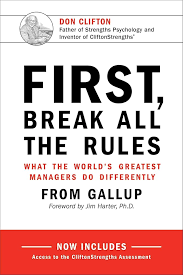
First, Break All the Rules
by Marcus Buckingham and Curt Coffman
Primary focus: Strengths-based leadership and role design
Core lesson:
High performance comes from amplifying strengths — not fixing every weakness.
This book challenges the assumption that good leadership means making everyone well-rounded. Instead, it shows that the most effective managers design roles and expectations around what people naturally do well.
Why it matters:
Strengths compound. Weakness-fixing has diminishing returns. When people spend more time operating in their strengths, engagement and performance increase — often dramatically.
How I use this in practice:
Coaching leaders to design roles around strengths rather than rigid job descriptions
Helping managers stop over-correcting and start leveraging what’s working
Helping individuals identify weak spots and design around them through systems or complementary partnerships
Who this book is for:
New and experienced managers who want to unlock performance without burning people out.
✨ Bonus: Pair this with StrengthsFinder for a practical implementation to your team.
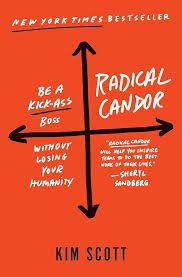
Radical Candor
by Kim Scott
Primary focus: Feedback, communication, and trust
Core lesson:
Clarity is kindness.
Radical Candor offers a practical framework for giving honest feedback while maintaining strong relationships. It names a common leadership tension: wanting to be kind while avoiding difficult conversations.
Why it matters:
Most performance issues are rooted in unclear expectations or avoided conversations — not lack of capability.
How I use this in practice:
Coaching leaders to give feedback that is direct, human, and timely
Helping teams replace unspoken tension with shared clarity
Reinforcing that honesty, delivered with care, builds trust
Who this book is for:
Leaders who care deeply about their people and want to communicate clearly without being harsh or avoidant.
The Hard Thing About Hard Things
by Ben Horowitz
Primary focus: Decision-making under pressure
Core lesson:
Leadership means making hard decisions without certainty — and owning them.
This book doesn’t romanticize leadership. It addresses fear, failure, layoffs, and responsibility head-on, and emphasizes judgment over formulas.
Why it matters:
Some leadership moments don’t have best practices — only tradeoffs. How you show up in those moments defines trust and credibility.
How I use this in practice:
Supporting leaders through high-stakes decisions and change
Normalizing the emotional weight of leadership without avoiding accountability
Helping clients distinguish between discomfort and misalignment
Who this book is for:
Founders, executives, and senior leaders navigating uncertainty or complexity.
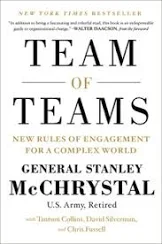
Team of Teams
by General Stanley McChrystal, Tantum Collins, David Silverman, and Chris Fussell
Primary focus: Leading in complexity and scale
Core lesson:
In complex systems, trust and shared context outperform control.
Team of Teams reframes leadership as system design. In fast-moving, interconnected environments, centralized decision-making becomes a bottleneck.
Why it matters:
Modern organizations require speed, adaptability, and ownership — none of which scale through micromanagement.
How I use this in practice:
Coaching leaders to clarify intent rather than over-specify execution
Helping teams improve information flow and trust
Reducing bottlenecks by pushing decisions closer to the work
Who this book is for:
Leaders managing cross-functional teams, growth, or organizational complexity.
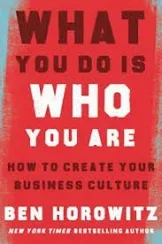
What You Do Is Who You Are
by Ben Horowitz
Primary focus: Culture and behavioral norms
Core lesson:
Culture is built through behavior, not intention.
This book reframes culture as the accumulation of daily actions, decisions, and consequences — not values statements or slogans.
Why it matters:
When behavior and values don’t align, trust erodes quickly. Culture is shaped whether leaders intend it or not.
How I use this in practice:
Helping leaders identify where daily behaviors contradict stated values
Coaching leaders to enforce standards consistently — especially when it’s uncomfortable
Reinforcing that promotions, exceptions, and consequences shape culture more than mission statements
Who this book is for:
Leaders responsible for shaping, scaling, or repairing culture.
A final note
These five books share a common belief:
Leadership is less about having the right answers and more about how you show up.
It’s shaped through everyday behavior — the conversations you’re willing to have, the standards you hold, and the trust you build over time.
If you’re stepping into people management for the first time — or refining how you lead — this list is a strong place to begin. These ideas won’t give you shortcuts, but they will give you orientation. And in leadership, that often matters most.
